


After a meal, Sam notices a burning feeling behind the breastbone. On another day, a sour taste rises into the throat. The two experiences may be connected, but heartburn vs acid reflux is not simply a choice between two names for the same thing. One describes a sensation; the other describes what is moving through the food pipe.
Knowing the difference can help you describe symptoms and decide when to seek advice. Occasional reflux is common, while repeated or troublesome symptoms deserve assessment. This guide explains heartburn, acid reflux, GERD, throat concerns and when to consult a clinician. It is general education, not a diagnosis or personal treatment plan.
Heartburn vs acid reflux: the short answer
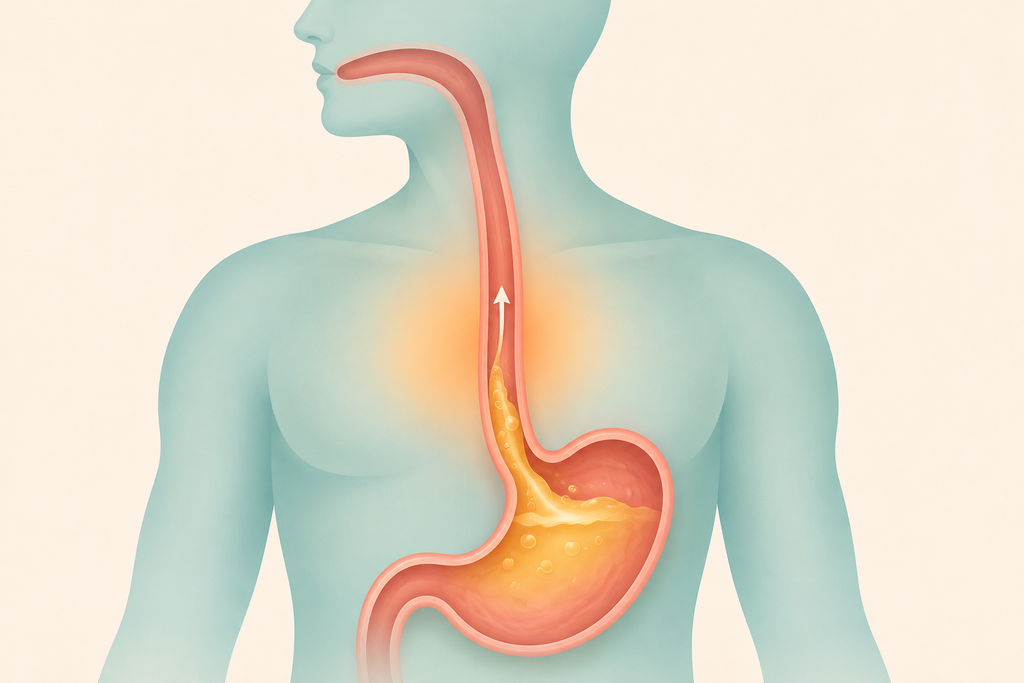
Acid reflux is the backward movement of stomach contents into the oesophagus, the muscular food pipe that connects the throat to the stomach. Those contents can include acid, food or liquid. Reflux may happen occasionally, and a person may not always notice it.
Heartburn is a burning discomfort, often felt behind the breastbone and sometimes rising toward the throat. Reflux is a common cause of heartburn because the lining of the oesophagus can be irritated by stomach contents. The terms describe different things: reflux is the event; heartburn is one possible symptom.
Reflux may also cause regurgitation, when food or liquid rises toward the mouth, or a sour taste. Some people have reflux without heartburn, and chest burning can have other causes. The NIDDK overview distinguishes reflux from the more persistent, troublesome pattern or complications called GERD. In short, reflux moves; heartburn is felt.
| Term | What it describes | What someone might notice |
|---|---|---|
| Acid reflux | Stomach contents moving backward into the oesophagus | Regurgitation, a sour taste or no obvious sensation |
| Heartburn | Burning discomfort in the chest, often behind the breastbone | Burning after a meal or when lying down |
| GERD | Reflux that repeatedly causes troublesome symptoms or complications | A longer pattern that may need clinical assessment |
What is acid reflux?
Your oesophagus carries food from the mouth to the stomach. A ring of muscle near its lower end usually helps keep stomach contents from flowing back upward. If the barrier relaxes at the wrong time or does not close effectively, some stomach contents may move into the oesophagus. This backward movement is called gastro-oesophageal reflux.
Although people say acid reflux, the material moving upward may include food or liquid, and some reflux is less acidic. A clinician considers whether reflux is causing symptoms and whether the pattern is persistent or concerning.
Reflux can happen once in a while, sometimes after a large or late meal, and sometimes without an obvious trigger. One episode does not establish a disease; frequency, impact and accompanying symptoms matter.
What does heartburn feel like?
People often describe heartburn as warmth, burning or discomfort in the middle of the chest, behind the breastbone. The sensation may travel upward toward the throat. It can appear after meals, when bending over or when lying down, although timing differs between people. A meal that triggers heartburn for one person may not affect another.
People may call this acidity, indigestion or gas. These words can mean different things, so describe where the sensation begins, how long it lasts, how often it returns, and what else happens.
Acid reflux symptoms: what else may happen?
Heartburn and regurgitation are common symptoms associated with reflux. Regurgitation can feel like liquid or food coming back up into the throat or mouth. A sour or bitter taste may follow. Some people also report belching, nausea or discomfort after meals. Symptoms can be more noticeable when lying flat or bending after eating.
Experiences vary: some people notice chest burning, others regurgitation or taste changes, and some have no clear symptom. A symptom list can guide a discussion but cannot diagnose GERD.
The NIDDK symptom guide notes that some people do not have typical heartburn or regurgitation. Persistent vomiting, swallowing difficulty, unexplained weight loss, bleeding or ongoing chest pain deserve medical attention.
Can you have reflux without heartburn?
Yes. Reflux can occur without the familiar burning behind the breastbone. Someone may notice regurgitation, a sour taste or another symptom instead. Some people have reflux without being aware of it. That is one reason the comparison between heartburn and acid reflux is helpful: heartburn is one possible experience, not a requirement for reflux to occur.
Acid reflux vs GERD: when does reflux become a disease?
Occasional reflux is common and does not automatically mean someone has gastro-oesophageal reflux disease. GERD is generally used when reflux repeatedly causes troublesome symptoms or leads to complications over time. A single sour taste, one episode of burning or discomfort after a particular meal does not confirm GERD.
There is no single symptom frequency that can diagnose every person. A clinician may ask how often symptoms happen, how long the pattern has continued, whether it interrupts sleep or eating, how it affects daily activities, and whether there are warning signs. Medical history, medicines and examination also shape the assessment. In some situations, a clinician may consider tests; many people do not need a test at the first conversation.
Can reflux affect the throat or voice?
Some people search for “silent reflux,” reflux cough or throat reflux after noticing hoarseness, throat clearing, cough, a sore throat or a lump-like feeling. Reflux may be considered as one possible contributor, especially when heartburn or regurgitation is also present. These symptoms, however, have many potential causes and do not prove reflux on their own.
Allergies, infections, asthma, voice strain, medicines and other conditions can cause similar symptoms. The American College of Gastroenterology advises considering the full clinical picture. ENT care may be relevant for persistent throat or voice concerns, while gastroenterology may be relevant for digestive symptoms.
What can bring on heartburn or reflux?
Meal size and timing, body position, pregnancy, smoking, body weight, a hiatal hernia and some medicines can influence reflux symptoms. Food and drink triggers vary. Coffee, alcohol, chocolate, spicy dishes, fatty foods and acidic foods are often reported, but there is no universal reflux diet that applies to everyone. A food that repeatedly seems to precede symptoms for one person may not affect someone else.
Rather than removing many foods at once, notice whether a particular item or habit repeatedly appears before symptoms. A short record can help identify patterns without turning meals into a source of worry. If you suspect that a prescribed medicine is contributing, do not stop it on your own; ask the prescriber or pharmacist whether it could be relevant and what options are appropriate.
For GERD, a clinician may discuss meal timing. NIDDK notes that some people may be advised to leave two to three hours between eating and lying down. Advice should fit your health and medicines.
Track the pattern, not just the meal
A brief symptom diary can make a consultation more useful. Note when the burning or sour taste occurs, how long it lasts, how often it returns, what you ate beforehand, and whether you were lying down, bending or exercising. Record any regurgitation, cough, hoarseness, nausea or swallowing difficulty that appears with it. Include medicines and supplements, including occasional antacids or pain relievers.

How does a clinician assess reflux symptoms?
Assessment usually begins with a conversation about symptoms and medical history, followed by an examination when appropriate. The clinician may ask when symptoms started, how often they happen, what they feel like, whether they occur after meals or at night, and whether swallowing, appetite, weight or sleep has changed. A list or photo of medicines and supplements can help clarify the picture.
Testing depends on the clinical question. If symptoms suggest complications, another condition, or do not improve with a suitable care plan, a doctor may consider investigations such as an upper endoscopy or reflux monitoring. These tests are not necessary for everyone who experiences occasional heartburn. The NIDDK diagnosis guide explains that assessment often starts with symptoms and medical history, with tests considered when useful.

When should you seek medical care?
Arrange a medical appointment if heartburn or reflux returns often, is troublesome, affects sleep or eating, or does not improve with appropriate guidance. Seek prompt medical advice for difficulty or pain when swallowing, food getting stuck, repeated vomiting, unexplained weight loss, poor appetite, or possible bleeding such as vomit that looks like blood or coffee grounds, or black tarry stools. These symptoms need a clinician’s attention.
Chest pain deserves special care. A heart-related problem can sometimes feel like burning or indigestion. Seek emergency help for sudden, severe or persistent chest discomfort, particularly if it feels like pressure, spreads to the arm, jaw or back, or comes with breathlessness, sweating, nausea or light-headedness. Do not assume that new or worrying chest pain is acid reflux. The NHS chest pain guidance describes symptoms that may require emergency assessment.
What may help with occasional symptoms?
If symptoms are mild and occasional, noticing the pattern and making measured changes may be more useful than following a long internet list of forbidden foods. Some people find it helpful to avoid lying down soon after eating or to identify a personal trigger. If symptoms happen at night, ask a clinician whether a change to sleep positioning is suitable. The best approach depends on the individual.
Over-the-counter medicines may not suit everyone, especially during pregnancy, with other medicines or with long-term conditions. Follow directions and ask a pharmacist or doctor if symptoms recur or relief is needed often. Do not stop prescriptions or start antibiotics for presumed reflux without advice.
Heartburn vs acid reflux in Gurugram: where to discuss symptoms
If you are searching heartburn vs acid reflux or reflux symptoms in Gurugram, The ENT GUT Clinic is at 108, First Floor, Eros City Square, Sector 49, Gurugram, Haryana. The clinic offers gastroenterology and ENT care. This may be relevant when digestive and throat concerns overlap, but a clinic name or specialty does not determine the cause of an individual’s symptoms.
Frequently asked questions
Is heartburn the same as acid reflux?
No. Acid reflux means stomach contents move back into the oesophagus. Heartburn is a burning feeling that may happen when reflux irritates the oesophagus. A person can have reflux without heartburn, and chest burning may have causes other than reflux.
Can you have acid reflux without a sour taste?
Yes. Reflux symptoms differ. Some people notice heartburn, some notice regurgitation or a sour taste, and others do not recognize a typical symptom. A sour taste is not required to diagnose reflux, and symptoms alone may not identify the cause.
Does one episode of heartburn mean I have GERD?
No. Occasional heartburn can happen without GERD. GERD is associated with a repeated troublesome pattern or complications. A clinician considers frequency, impact, history and other symptoms before deciding whether further assessment is appropriate.
Can acid reflux cause a sore throat or hoarse voice?
Reflux may be considered as one possible contributor, but throat symptoms can also result from allergies, infection, voice strain, asthma or other conditions. Persistent hoarseness, cough or throat irritation should not automatically be labelled silent reflux.
When is chest burning an emergency?
Seek emergency help for sudden, severe or persistent chest pain, especially when it spreads or is accompanied by breathlessness, sweating, nausea or faintness. Do not assume that concerning chest symptoms are heartburn.
Medical note
This article is for general education, not diagnosis or personal treatment advice. Symptoms overlap and can have causes other than reflux. A qualified clinician can recommend assessment based on an individual’s history and examination.
Clinic details and appointments
Reflux care.
Dr. Zubin Dev Sharma, Senior Consultant in Neurogastroenterology & GI Motility at Apollo Hospitals, Gurugram; Director, The ENT GUT Clinic.
Dr. Dilpreet Bajwa, Senior Consultant in ENT & Cochlear Implant Program at Artemis Hospital, Gurugram; Director, The ENT GUT Clinic.
Address: 108, First Floor, Eros City Square, Sector 49, Gurugram, Haryana 122018.
Call: +91 92209 60066
WhatsApp: +91 86480 00088
Book an appointment
Sources for readers
- NIDDK: Acid Reflux and GERD in Adults
- NIDDK: Symptoms and Causes
- NIDDK: Diagnosis
- NHS: Heartburn and Acid Reflux
- NHS: Chest Pain
- American College of Gastroenterology: Acid Reflux