

Table of Contents
Has a scan or blood test mentioned fatty liver? That finding suggests fat may be present, but it does not by itself explain the cause or show whether inflammation or scarring is present. Doctors combine your history, examination and selected tests to assess those questions.
This guide outlines fatty liver risk factors, tests doctors may consider, what results can and cannot show, and questions to bring to an appointment. It is general information, not a personal diagnosis or testing plan.
What does fatty liver mean today?
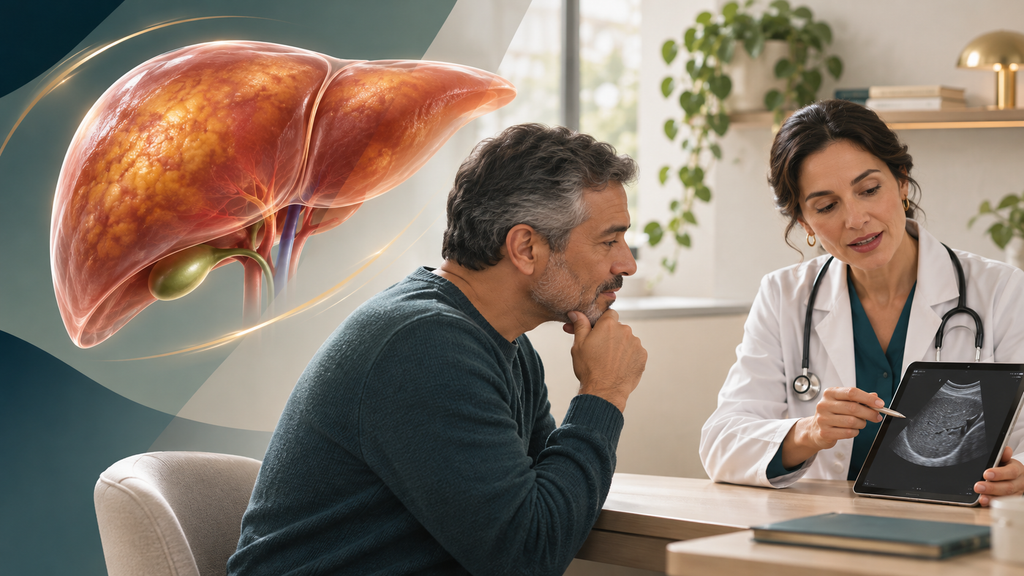
Fatty liver is a common term for extra fat in liver cells. A report may call this hepatic steatosis or fatty infiltration. These terms describe a finding, not its cause or stage.
Current terminology uses MASLD for steatotic liver disease associated with metabolic dysfunction and MASH for its inflammatory form. Older records may say NAFLD or NASH, so both labels can appear. AASLD explains the updated terminology.
Not every case of liver fat is MASLD. Alcohol, medicines, viral hepatitis or other conditions may contribute, sometimes alongside metabolic risks. Clinicians review alcohol use, prescriptions and supplements, health history, and other possible causes before classifying a result. The 2024 EASL-EASD-EASO guideline describes the current approach.
Fat in the liver is only one part of the picture. Clinicians also consider whether there is inflammation or fibrosis, and whether another cause fits better. A scan can show steatosis without showing cell injury or reliably staging fibrosis, so these terms are not interchangeable. That distinction helps explain why a doctor may discuss a fibrosis score even after an ultrasound has reported fat.
Fatty liver risk factors: who may need an assessment?
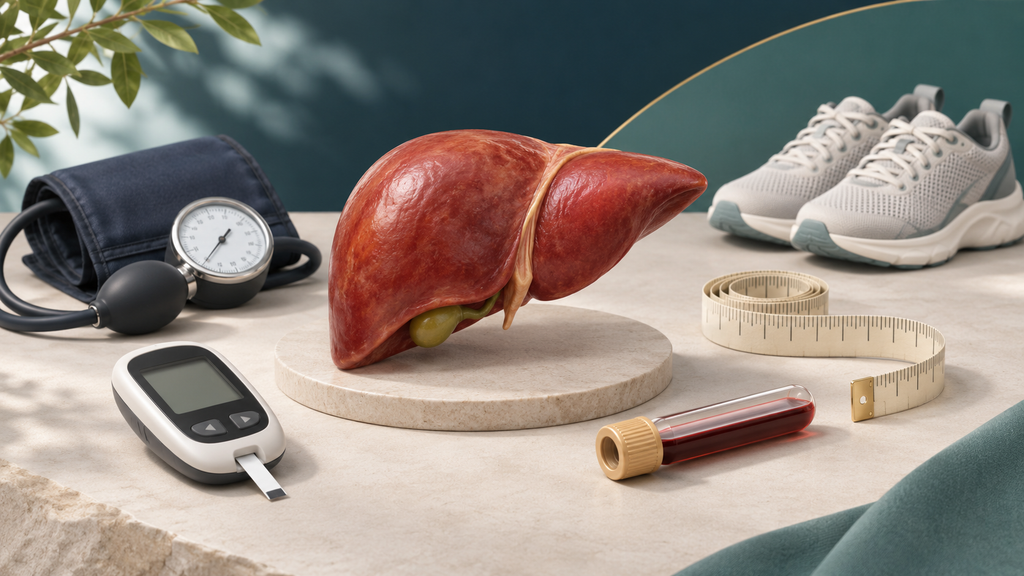
Fatty liver risk is higher alongside type 2 diabetes, prediabetes or insulin resistance; overweight or obesity, especially with abdominal fat; high triglycerides or abnormal cholesterol; high blood pressure; or metabolic syndrome. Family history and genetics may also influence risk. None of these factors proves fatty liver, and a person’s body size alone cannot rule it out.
Physical inactivity and diets high in added sugar or sugary drinks are among the lifestyle details a doctor may ask about. The purpose is to understand health risks, not assign blame. NIDDK lists factors considered during assessment.
Be open about alcohol: alcohol-related liver disease and MASLD are classified differently, but risks can overlap. Mention your usual intake, prescriptions, pain relievers, herbal products and supplements. Do not stop a prescribed medicine or start a liver cleanse without medical advice.
A doctor may consider further fatty liver assessment if you have diabetes, several metabolic risks, persistently abnormal liver tests or fat noted incidentally on imaging. Which tests are appropriate depends on your health history and clinical context.
Fatty liver can also occur in people who are not living with obesity. A person's weight alone does not confirm or exclude MASLD; clinicians look at the wider pattern, including blood sugar, cholesterol, blood pressure, family history and other possible causes. If one risk factor applies to you, it is reasonable to ask whether it changes your personal assessment plan.
Can fatty liver cause symptoms?
Fatty liver often causes no noticeable symptoms and may be found on routine blood work or imaging. Some people report tiredness or a vague ache in the upper-right abdomen, but these symptoms have many possible causes. NIDDK notes that fatty liver is usually silent, with few or no symptoms.
Feeling well does not confirm that the liver is healthy, and fatigue does not prove fatty liver. Symptoms, risk factors, blood tests and imaging must be considered together. Ask a clinician what your result means rather than judging severity by how you feel.
Which tests may be used for fatty liver?
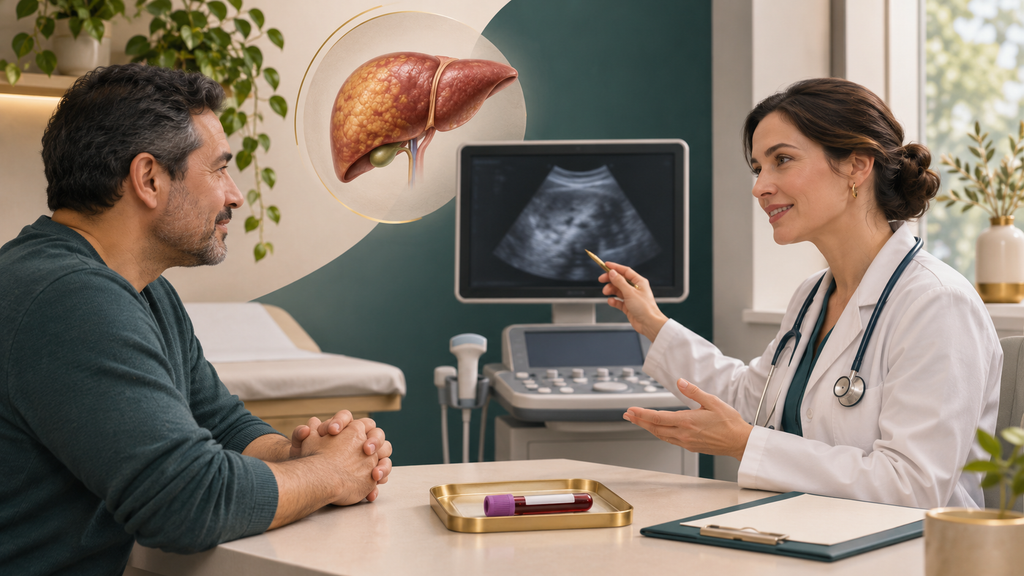
There is no single fatty liver test that answers every question. Some tests look for fat; others estimate inflammation, liver function or the likelihood of fibrosis (scarring). A clinician may choose a sequence rather than order every test at once.
| Test or assessment | What it may help assess | What it cannot establish by itself |
|---|---|---|
| History and examination | Risk factors, alcohol use, medicines, symptoms and other clues | A confirmed cause or fibrosis stage |
| Blood tests | Liver enzymes, platelets, glucose, cholesterol and other possible causes | Whether liver fat or scarring is definitely present |
| Abdominal ultrasound | Visible liver fat and general structure | Reliable inflammation or fibrosis staging |
| FIB-4 or another risk score | Whether further fibrosis assessment may be useful | A diagnosis of fatty liver or a stand-alone answer |
| Elastography or selected MRI | Liver stiffness or, with specific MRI methods, fat measurement | A complete diagnosis without clinical context |
| Liver biopsy | Tissue-level information in selected cases | A routine test needed by everyone |
1. Medical history and examination
A clinician may ask about diabetes, blood pressure, cholesterol, weight changes, family history, alcohol, medicines, supplements and previous scans. This history helps identify possible causes and decide whether further tests are useful.
2. Blood tests
A liver panel may include ALT and AST. Other tests can include bilirubin, alkaline phosphatase, albumin and platelets. Blood sugar or HbA1c and cholesterol or triglycerides may also be reviewed because they describe metabolic risk. Depending on your history, additional tests may check for viral hepatitis or other causes of abnormal results.
ALT and AST are clues, not a complete fatty liver diagnosis. Elevated enzymes do not identify a cause by themselves, and normal enzymes do not reliably rule out fibrosis. The AASLD practice guidance cautions against using liver enzymes in isolation.
Looking for other causes
When the history or initial results point to another possibility, a doctor may order targeted blood tests or review previous records. Examples can include tests for viral hepatitis or other liver conditions, but they are not required for everyone. This is one reason to mention alcohol, recent illness, family history, medicines and supplements accurately. The purpose is to avoid assuming that every scan showing fat has the same cause.
3. Abdominal ultrasound
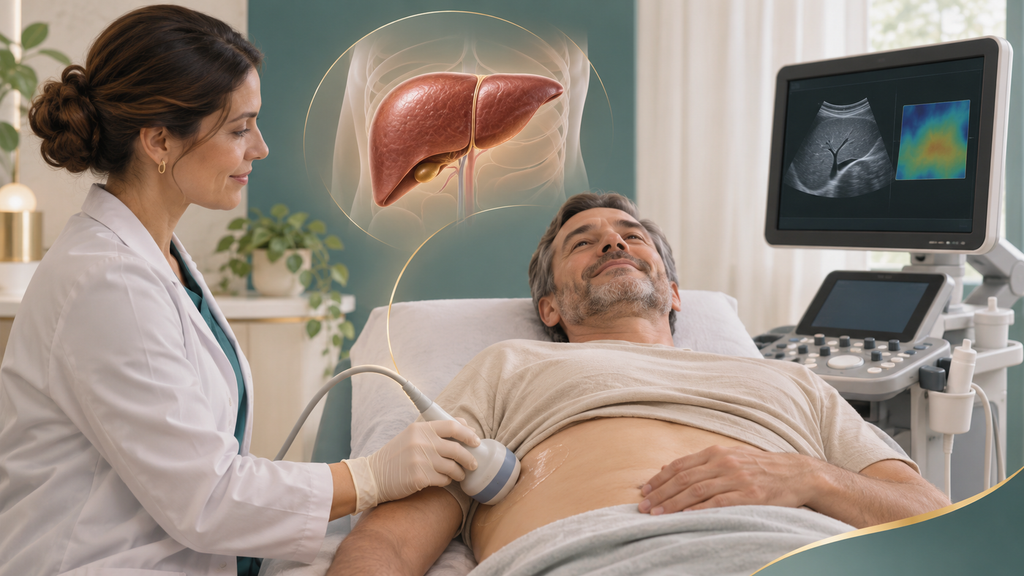
Ultrasound can show visible liver fat and general structure, without radiation. The report may describe steatosis as mild, moderate or marked, though grading can vary.
Routine ultrasound cannot reliably show inflammation or stage fibrosis, and it may be less sensitive for small amounts of fat. A report mentioning fatty liver is a starting point for discussion, not a complete staging result. NIDDK explains imaging limits.
4. FIB-4 and other fibrosis risk scores
A clinician may calculate FIB-4 using age, AST, ALT and platelet count. This score estimates the likelihood of advanced scarring and can help decide whether a second assessment, such as elastography, is appropriate. It does not image the liver or diagnose fatty liver.
Interpretation depends on age, health conditions and clinical context. Do not use an online result as your diagnosis; a clinician should confirm the inputs and decide what the score means. EASL recommends a stepwise approach for appropriate risk groups, often starting with FIB-4 and considering elastography when more information is needed.
5. Elastography, MRI and selected tests
Transient elastography, often called FibroScan, uses a probe to estimate liver stiffness; some systems also estimate fat. Other elastography methods or magnetic resonance elastography may be considered in selected cases. MRI-PDFF can quantify liver fat but is not needed for everyone. EASL describes these non-invasive tests.
Each test has different strengths and limitations. Your doctor can explain why a test is being considered and what decision it may help guide.
6. Is a liver biopsy always needed?
No. Biopsy takes a small tissue sample and is reserved for selected cases, such as when the diagnosis remains uncertain or other tests conflict. It is not required for everyone with fatty liver. NIDDK explains when biopsy may be considered.
How should you understand the results?
Separate three questions: Is fat visible? Is there evidence of liver injury? Is fibrosis a concern? A routine scan may show fat, blood tests add context, and a risk score or elastography may help assess scarring. No single result tells the whole story.
The amount of fat on an ultrasound does not equal the amount of scarring. Liver enzymes also cannot rule fibrosis in or out on their own. If results suggest risk or do not agree, a clinician may recommend another test or consider other causes.
Ask what is known, what remains uncertain, whether more testing would change the plan, and when follow-up is appropriate. The EASL guideline supports a stepwise assessment based on risk and clinical context.
A fibrosis score is a triage aid, not a verdict. A lower-risk result may mean routine follow-up is enough for now; an indeterminate or higher-risk result may lead to elastography, another non-invasive test or specialist review. The right interval for repeating tests depends on the person's risk profile and prior results. Ask your doctor to write down the next step and when to revisit it so that a fatty liver result does not become an unexplained note in an old report.
Questions to ask your doctor about fatty liver
A short list can make an appointment more useful. Consider asking:
- What does my report mean by fatty liver, hepatic steatosis or MASLD?
- Does the scan show fat only, or is there a sign of fibrosis?
- Which blood results matter in my case?
- Do my health risks mean I need a fibrosis assessment?
- Would FIB-4, elastography or another test change the next step?
- Should we check for other causes, including alcohol, viral illness or medicines?
- When should I repeat tests or return for follow-up?
- Are any medicines or supplements relevant, and should I change anything only after discussing it with you?
Bring scan reports, blood results, a current medicine and supplement list, and relevant diabetes, blood-pressure or cholesterol records. Note when the tests were done and whether you were unwell at the time. This can help your doctor compare results and avoid unnecessary repeat testing. If you have several reports, arrange them by date; changes over time can be more useful than a single isolated number. Bring questions about fasting instructions or preparation before any planned test, because requirements differ by test and clinic.

Frequently asked questions about fatty liver
Can fatty liver be present with normal liver enzymes?
Yes. Enzymes are only one part of assessment; normal ALT or AST alone cannot rule out fatty liver or fibrosis. A doctor may consider risk factors, scans and other tests.
Does ultrasound show liver scarring?
Routine ultrasound can show fat but does not reliably stage fibrosis. Elastography or another test may be considered if scarring needs assessment.
Is fatty liver the same as MASLD?
Not always. Fatty liver is a broad term; MASLD is a specific classification linked with metabolic risk. Alcohol and other causes also matter.
Does everyone with fatty liver need a biopsy?
No. Biopsy is reserved for selected cases; many people are assessed through history, blood tests, imaging and non-invasive tests.
What should I do after a fatty liver result?
Discuss the report with a clinician and bring your medicine list and previous results. Do not start supplements, stop prescribed medicine or rely on an online score as your diagnosis.
Does fatty liver always mean alcohol is the cause?
No. Metabolic factors, alcohol, medicines and other liver conditions may be relevant, sometimes in combination. A clinician needs an accurate history to distinguish them.
Can I use an online FIB-4 calculator?
FIB-4 uses routine test values, but its interpretation depends on age, health status and clinical context. Ask a clinician to calculate and explain it alongside your full history rather than treating an online score as a diagnosis.
A clear next step
A fatty liver finding deserves context, not guesswork. Knowing your risk factors and what each test measures can make your next discussion more focused. Take the report to a qualified clinician and ask what it means for you.
Learn about Gastroenterology & Neurogastroenterology care at The ENT GUT Clinic or request an appointment. Contact the clinic to confirm availability and the appropriate consultation pathway.
General information only: This article does not replace an individual medical consultation, diagnosis or treatment advice.
Clinic doctors
Dr. Zubin Dev Sharma : Senior Consultant, Neurogastroenterology & GI Motility, Apollo Hospitals, Gurugram; Director, The ENT GUT Clinic. Doctor profile
Dr. Dilpreet Bajwa : Senior Consultant, ENT & Cochlear Implant Program, Artemis Hospital, Gurugram; Director, The ENT GUT Clinic.
Appointments
The ENT GUT Clinic
Phone: +91 92209 60066 / +91 86480 00088
Website: entgutclinic.com
Address: 108, First Floor, Eros City Square, Sector 49, Gurugram, Haryana
References
- NIDDK: Symptoms and Causes of NAFLD/MASLD
- NIDDK: Diagnosis of NAFLD/MASLD
- EASL-EASD-EASO Clinical Practice Guidelines on MASLD (2024)
- AASLD Practice Guidance on assessment and management of fatty liver disease
- The ENT GUT Clinic: Gastroenterology & Neurogastroenterology