

Table of Contents
Earbuds are convenient. Is your listening routine safe?
earbuds and hearing loss Earbuds and headphones make it easy to listen to music, take calls, attend online classes and watch videos throughout the day. The important hearing-health question is not simply whether a person uses earbuds. Risk depends on how loud the sound is, how long it reaches the ears and how often loud exposure is repeated. The same person may have a quiet commute one day and spend hours on calls or music the next.
Noise-related hearing damage can develop gradually, and early changes may be easy to miss. Some people first notice ringing after a loud event, difficulty following conversation in a busy room or trouble hearing higher-pitched sounds. The World Health Organization (WHO) gives a useful population-level reference: its safe-listening guidance says adults can listen at 80 dB for up to 40 hours a week, while higher levels use up the sound allowance faster. This is not a personal guarantee or a target to aim for.
The good news is that everyday habits can reduce avoidable exposure. This article explains practical steps, what device controls can and cannot tell you, and when to seek a hearing assessment. It does not replace advice from an audiologist or ENT doctor.
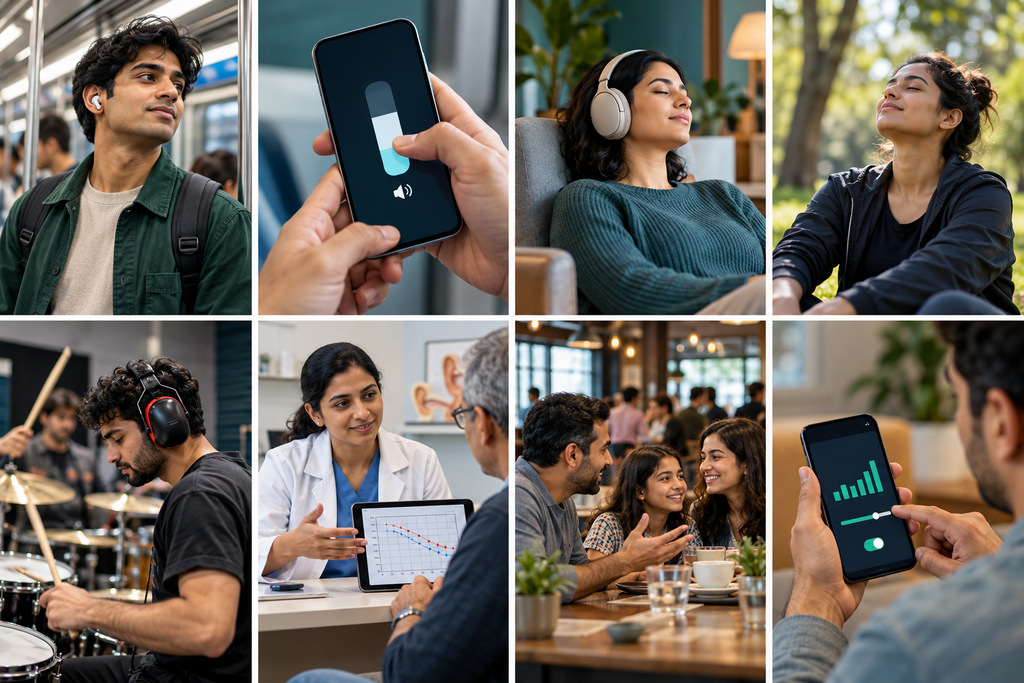
1. Loudness and listening time work together | Earbuds and Hearing Loss
Sound exposure is a dose. A higher volume uses up that dose faster, while a longer listening period adds more exposure. A brief sound at a high level can also be harmful, particularly if it is extremely loud or close to the ear. Because real-world sound levels vary and phone volume percentages are not calibrated in the same way across devices, there is no universal percentage that guarantees safe listening for every person and headphone.
WHO’s adult reference of 80 dB for 40 hours per week can help explain the relationship between level and duration. WHO notes that at 90 dB the comparable listening time is much shorter. Treat these figures as broad guidance, not a reason to listen at the limit. If a device provides sound exposure monitoring, use it as a helpful estimate and follow its warnings. A phone reading may not capture every sound source or fit perfectly with how the ear receives sound.
2. A practical “turn it down and take breaks” routine
Start by choosing the lowest volume that lets you hear comfortably. Take breaks during long sessions, and avoid trying to overcome traffic, gym or airplane noise by raising the volume sharply. Well-fitted noise-cancelling headphones can make it easier to hear at a lower level in some settings, but they do not make loud listening harmless. Keep the volume down even when the device blocks background noise.
If people nearby can clearly hear your music, or you need to raise your voice to talk while listening, reduce the volume or pause. Remove earbuds when you do not need them, especially during quiet periods and before sleep if they are causing discomfort. If you use headphones for work, take short listening breaks between meetings and keep other loud exposures in your day in mind. The CDC’s hearing-loss prevention guidance also recommends turning sound down, taking breaks and using hearing protection when loud environments cannot be avoided.
3. Use device safety features as a prompt, not a diagnosis
Many phones and audio devices offer a headphone-level summary, sound exposure alert or volume-limiting feature. Turn these on if available, check the manufacturer’s instructions and respond to warnings by lowering the volume or taking a break. WHO’s safe-listening standard encourages devices to provide exposure tracking, volume-limiting options and information that helps people make safer choices.
These tools are useful for awareness but are not a hearing test. A low exposure reading does not rule out hearing difficulty from another cause, and an alert does not tell you whether permanent damage has occurred. Do not rely only on “60 per cent volume” advice: the actual output varies by device, headphone, recording and fit. Use the built-in monitor as one guide and keep the listening level comfortable and moderate.
4. Remember concerts, traffic and work noise
Earbud use is only one part of a person’s total sound exposure. Loud concerts, wedding speakers, clubs, power tools, machinery and traffic can add to the overall dose. If you attend a loud event, take breaks in quieter areas, move away from speakers and consider properly fitted earplugs. At work, use the protective equipment recommended for the environment and speak with an occupational-health professional if noise exposure is regular.
If you have already been around loud sound, give your ears time in a quieter environment. Temporary muffled hearing or ringing after noise is a warning to reduce exposure; it should not be treated as proof that the ears have fully recovered. Repeated episodes are a reason to review listening habits and ask a clinician about hearing assessment. Noise-induced hearing loss is often permanent, which makes prevention especially valuable.
5. Warning signs that deserve attention
Arrange a hearing assessment if you regularly ask people to repeat themselves, struggle to understand speech in a group, need the television louder than others prefer, or notice persistent ringing or buzzing. Difficulty hearing high-pitched sounds, one-sided hearing change, ear fullness or a new difference between ears should also be discussed with a healthcare professional. Symptoms may arise from wax, infection, middle-ear problems, noise exposure or other causes; only an appropriate evaluation can distinguish them.
Sudden hearing loss developing over hours or a few days needs urgent medical assessment. Do not wait to see whether it resolves or try to treat it with ear drops unless a clinician has advised you to do so. Seek urgent care as well for severe ear pain with fever, discharge after an injury, or hearing changes accompanied by facial weakness, severe dizziness or other neurological symptoms. For emergencies, contact local emergency services.
6. What happens at a hearing check?
A hearing appointment usually begins with questions about when the change started, whether it affects one or both ears, any ringing or dizziness, past ear problems, medicines and noise exposure. The clinician may examine the ear canal and eardrum. A formal hearing test is performed by an audiologist using tones or speech at different levels; the results help show which pitches are affected and how hearing compares between ears.
The next steps depend on the findings. Some hearing problems have a treatable cause, while others may need monitoring, hearing support or further ENT evaluation. A hearing check is not a judgment about how well someone listens, and it is useful even when the person is uncertain whether a change is significant. Bring previous reports and a list of ear medicines or devices if you have them.
7. Earbuds, earwax and hygiene
Earbuds can irritate the ear canal or trap moisture, especially when worn for long periods, used during exercise or shared. Clean them according to the manufacturer’s instructions, do not share in-ear devices and let ears dry after sweating or bathing. Avoid inserting cotton buds, pins or other objects into the ear canal; these can push wax deeper or injure the canal or eardrum. Earwax is normal and usually moves outward on its own.
If you have itching, pain, discharge, blockage or a sudden change in hearing, pause in-ear use and seek advice rather than trying to clean deeply. People with hearing aids, recurrent ear infections, eczema or previous ear surgery may need tailored advice on device fit and cleaning. Earbud hygiene does not prevent noise-related hearing loss; volume and duration still matter.
8. Make a listening plan you can maintain
Choose two or three habits that fit your routine: enable exposure notifications, lower your usual volume, pause between long calls, carry earplugs for loud events or use the phone speaker in a quiet room. If you work in noisy settings, include workplace protection. Encourage children and teenagers to use volume limits and to take breaks; they may not notice that their listening level is high in a noisy environment.
If you have ringing, muffled hearing or trouble understanding speech, record when it occurs and which ear is affected. Bring the notes to an audiologist or ENT specialist. People who already have hearing loss can still protect remaining hearing by avoiding excessive noise and following their clinician’s recommendations. Ask about safe listening controls on your devices, but remember that device settings cannot replace a hearing evaluation when symptoms are present.
The takeaway
Earbuds themselves do not determine whether listening is safe; sound level, exposure time and repeated loud environments all matter. Keep volume moderate, take breaks, use sound-monitoring features where available and protect your ears at concerts and work. Seek a hearing check for persistent ringing, trouble following conversations or a noticeable change. Sudden hearing loss requires urgent assessment.
Frequently asked questions
Can earbuds cause hearing loss? Listening at excessive levels for long periods can put hearing at risk whether sound comes from earbuds, headphones, speakers or another source. The important factors are loudness, duration and repeated exposure. Using earbuds does not guarantee harm, but keeping volume moderate and taking breaks are sensible ways to reduce avoidable noise exposure.
Is 60 per cent volume a safe limit? It is a rough consumer tip, not a universal measurement. Different phones, earbuds, recordings and fits can produce different sound levels at the same displayed percentage. Use your device’s exposure controls if available, lower the volume and take breaks rather than relying on one number as a guarantee.
What is the WHO safe-listening reference? WHO guidance gives adults a reference of 80 dB for up to 40 hours per week; higher sound levels use up the equivalent exposure more quickly. It is a broad public-health reference, not a personalized safe threshold. People exposed to other loud sounds should consider their total sound dose and follow clinical or workplace guidance.
Should I worry about ringing after a concert? Ringing or muffled hearing after loud sound suggests your ears were exposed to a high level. Move to a quieter environment and avoid further loud exposure. If ringing persists, keeps recurring or comes with hearing difficulty, arrange a hearing assessment. Sudden hearing loss needs urgent medical review.
Are noise-cancelling headphones safer? They may help some people hear audio at a lower volume in noisy settings, but they do not make loud listening safe. Keep the volume moderate and take breaks. In situations where you must hear traffic, alarms or announcements, use a listening mode that preserves awareness of your surroundings.
When should I have my hearing tested? Arrange a check if you have persistent tinnitus, trouble following conversation, regularly ask people to repeat themselves, or notice a change in one or both ears. Sudden loss over hours or days needs urgent assessment. A test can help distinguish hearing changes from wax, infection or other causes.
Can I clean my ears with a cotton bud after using earbuds? Avoid placing cotton buds or other objects in the ear canal. They can push wax deeper or injure the canal or eardrum. Clean the earbuds following manufacturer instructions, do not share them and ask a clinician about pain, blockage, itching or discharge.
Can hearing return after loud music? Temporary muffling or ringing can improve, but repeated or intense exposure may cause lasting damage. It is not possible to tell from a person’s feeling alone whether hearing has fully recovered. If symptoms persist, recur or are accompanied by hearing difficulty, arrange professional assessment and avoid more loud sound.
Are earbuds safe for children? Children can use audio devices more safely when adults help set volume limits, encourage breaks and choose a comfortable level. WHO provides a more conservative listening reference for children than adults. Device controls are helpful, but supervision and a quiet listening environment matter too. Ask a clinician if a child reports ringing or difficulty hearing.
| Patient note: This article provides general information and cannot assess an individual’s hearing. A clinician or audiologist can advise on symptoms and testing. |
Ready to talk with a specialist?
If digestive, hearing, nose or throat symptoms are affecting your day, book an appointment with The ENT GUT Clinic in Gurugram. Our team can listen to your concerns and discuss suitable next steps.


